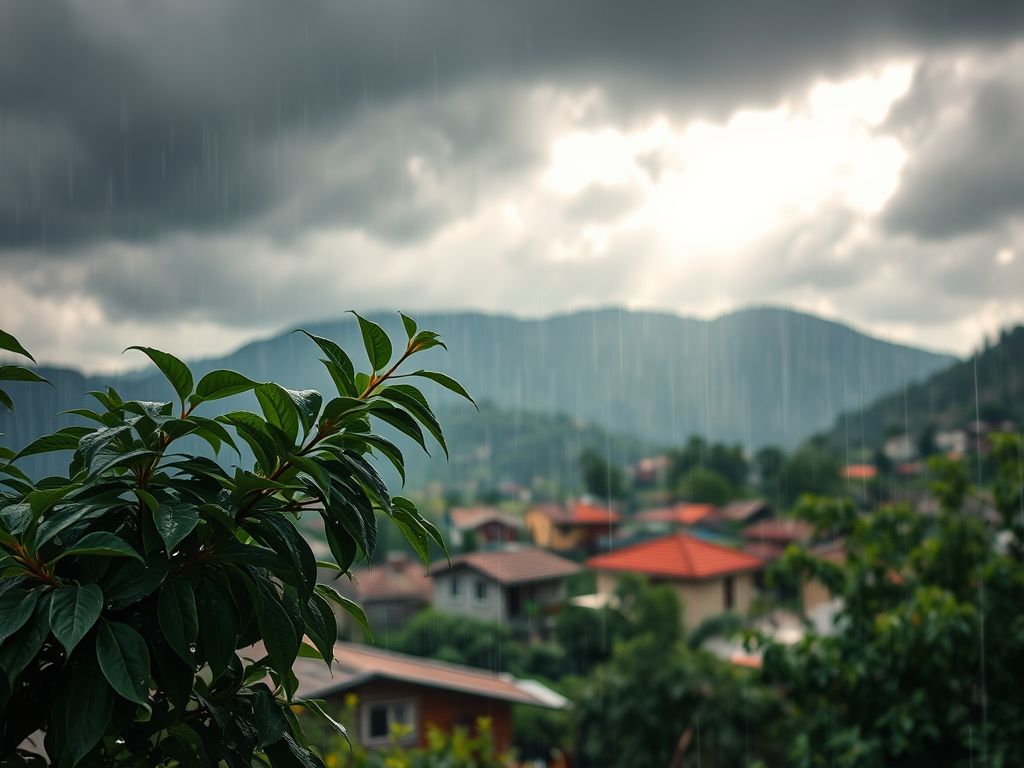
Rain in the Turkish village of Tavaklı follows the typical pattern of the North Aegean climate, where most rainfall arrives between late autumn and early spring. The wettest months are usually December, January and February, when Atlantic and Mediterranean weather systems bring steady rain, cooler temperatures and occasional storms. During this period the landscape becomes green and fertile, and the nearby hills often hold moisture for days after a heavy downpour.
Spring tends to be milder, with lighter showers that gradually give way to long stretches of dry, warm weather. By late May the village normally settles into the familiar Aegean summer of sunshine, blue skies and very little rainfall. However, Tavaklı’s position on the Aegean coast means that it is sometimes affected by sudden changes in weather. Even in mid-summer, the area can experience short bursts of unsettled conditions, bringing strong winds, heavy rain and the occasional thunderstorm. These events tend to pass quickly, but they are a reminder that the climate here, while generally predictable, still has moments of dramatic variation.
Overall, Tavaklı enjoys a warm, dry summer and a mild, wet winter, but those rare summer storms add a surprising and sometimes refreshing twist to the village’s weather patterns.






Leave a Reply