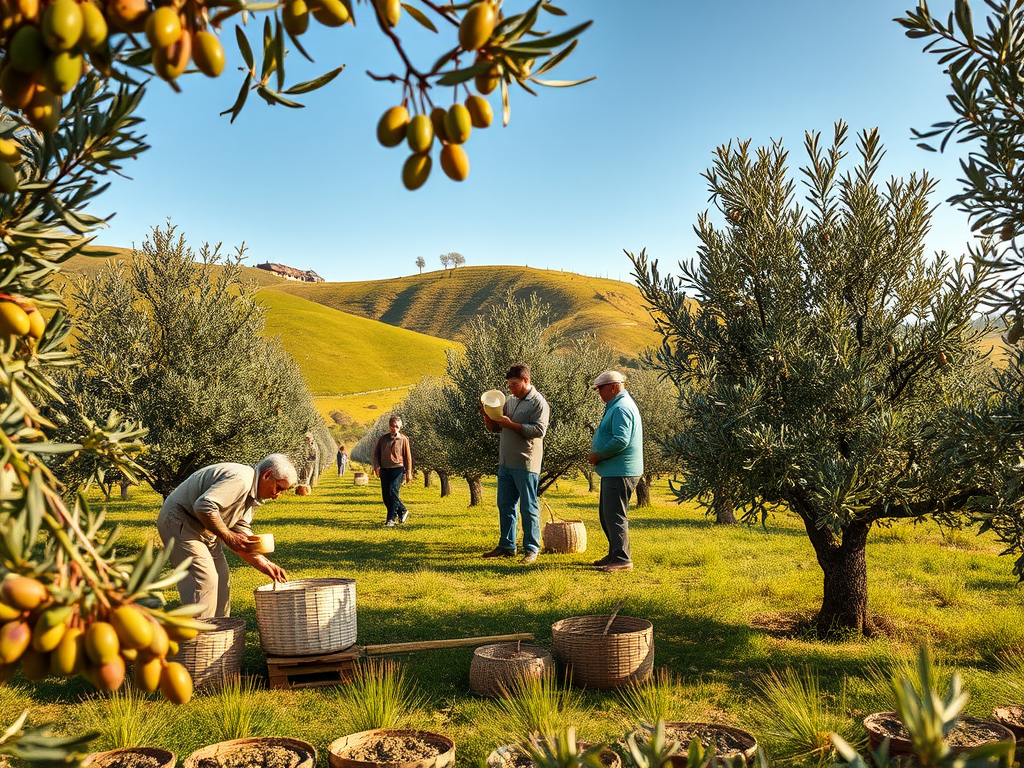
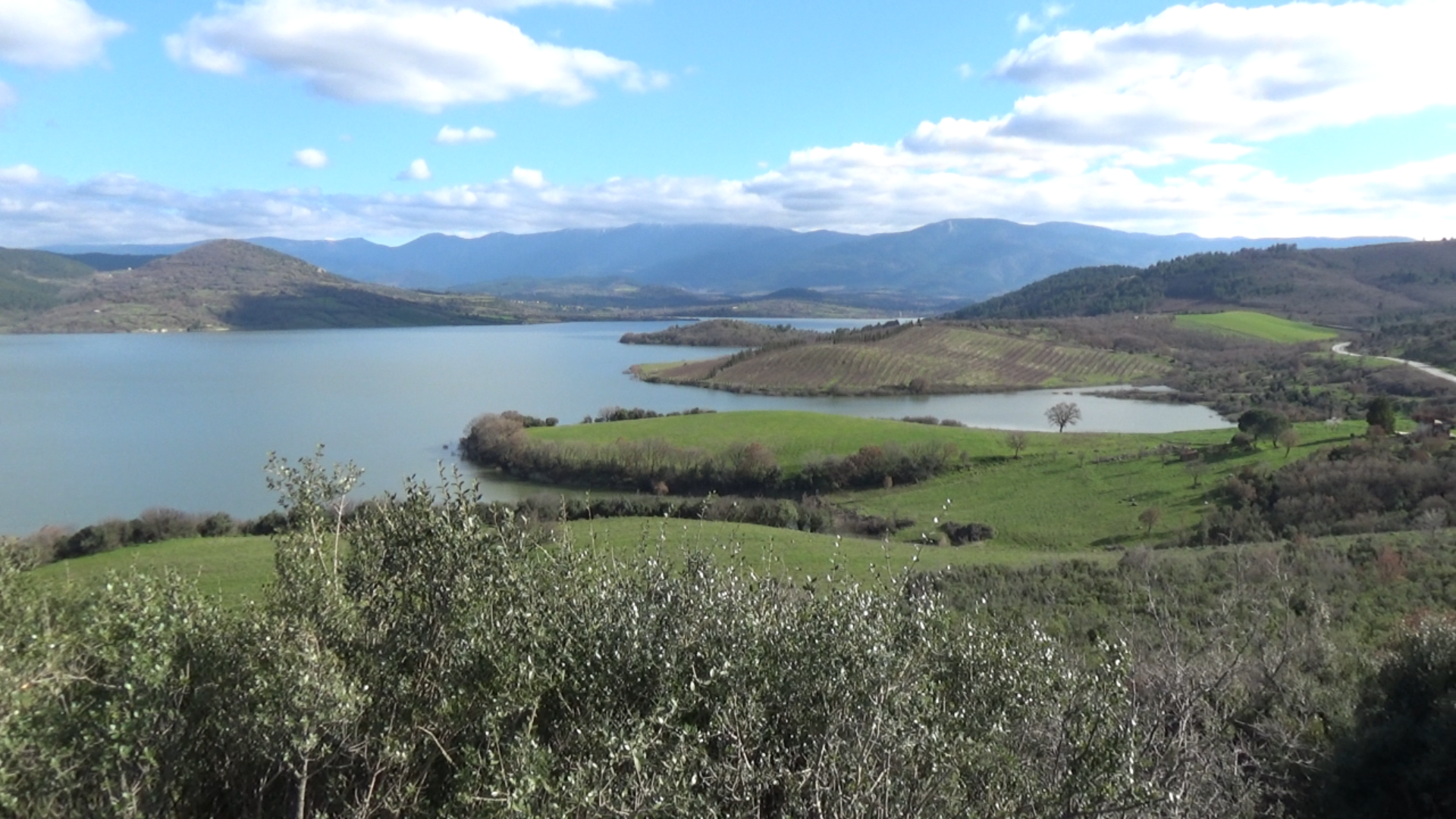
The gently undulating landscape around Tavaklı, a small coastal village in the Ezine district of Çanakkale, is dominated by olive groves interspersed with smallholdings that grow vegetables and fruit for local markets and household consumption. Many family plots are step-like terraces or small fenced orchards, worked with a mix of traditional methods and modern machinery. Farmers typically combine olive production with small-scale livestock — flocks of sheep and goats, a few dairy cows where pasture allows, and poultry — creating mixed, self-sufficient holdings rather than large industrial farms. The local economy revolves around these small and medium-sized operations, with several nearby olive-oil mills serving the surrounding villages and providing the crucial link between harvest and finished product.
The olive varieties found around Tavaklı are mostly those suited for oil production rather than table olives. The Ayvalık type is especially common in the region and valued for its balanced oil with fruity and slightly peppery notes. Groves are often dry-farmed, with trees adapted to the region’s rocky, limestone-based soils. These hardy trees can survive long dry summers and produce consistently high-quality olives with good oil yield.
Alongside olives, the villagers of Tavaklı and nearby settlements cultivate a variety of vegetables suited to the Mediterranean climate. Tomatoes, peppers, courgettes, cucumbers, aubergines, beans, onions, and brassicas such as cauliflower and cabbage are commonly grown, while in cooler spots or where irrigation is available, farmers also plant leafy greens and seasonal herbs. Fruit trees — particularly figs, apricots, and peaches — dot many gardens and orchards, often serving as shade trees as well as a source of extra income. Much of this produce is sold at local markets in Ezine and the coastal towns, while a portion is kept for home use, pickling, or drying.
The olive oil industry around Tavaklı blends traditional know-how with modern technology. Processing methods vary, but two primary techniques dominate: soğuk sıkım (cold pressing) and sıcak sıkım (hot pressing). In cold pressing, olives are crushed and processed at low temperatures, typically below 27°C, to preserve natural antioxidants, flavours, and aromas. This method produces the highest quality extra virgin olive oil and is increasingly favoured by producers aiming for premium-grade oil. Hot pressing, by contrast, uses higher temperatures to increase oil yield but can degrade delicate flavour compounds, resulting in a slightly lower-quality product. In and around Tavaklı, most of the newer mills have adopted the soğuk sıkım process, catering to the growing demand for high-quality, early-harvest oils.
The oil extraction process typically begins within hours of harvest to prevent fermentation. Olives are cleaned and crushed into a paste, which is then gently malaxed — a slow mixing process that allows oil droplets to combine. The paste is then separated by centrifuge or press to extract the oil, which is subsequently filtered or left to settle naturally before bottling. This careful handling is key to producing a pure, aromatic oil with a golden-green hue and low acidity.
Olive oil produced in Tavaklı falls into several grades, similar to international standards. Natürel sızma (extra virgin) is the top grade, with minimal acidity and superior taste; natürel birinci (virgin) follows, slightly higher in acidity but still suitable for table use. Refined and blended oils, often labelled simply as “olive oil,” are made by refining lower-grade oils and mixing them with virgin oil for a milder taste and higher smoke point. Lampante oil, which is not fit for direct consumption, is refined further or used in industrial applications.
Prices vary depending on grade and harvest year. Commodity-grade olive oil in bulk might sell for around 180 Turkish Lira per litre, while premium early-harvest soğuk sıkım natürel sızma oils can fetch up to 1,050 Turkish Lira per litre. Converted at current rates, this is roughly equivalent to £3.24–£18.91, €3.69–€21.51, or $4.27–$24.88 per litre. These price differences highlight why many local producers are focusing on quality and direct sales to capture the higher end of the market.
An interesting and practical by-product of olive oil production in this region is the use of olive pits — the hard cores or seeds of the fruit — as a source of fuel. After oil extraction, the pits are separated, dried, and sometimes crushed into smaller granules. Known locally as pirina çekirdeği, these residues have a high calorific value and burn cleanly, producing strong, consistent heat with little smoke. They are commonly used in pellet stoves, boilers, and even some industrial heating systems. Many rural households and small businesses around Tavaklı use olive-pit fuel as a cost-effective and sustainable alternative to coal or wood, taking advantage of what would otherwise be a waste product. The growing popularity of this eco-friendly fuel also supports the circular economy of olive farming by reducing waste and lowering energy costs.
For farmers in Tavaklı, the presence of nearby mills, a supportive agricultural community, and growing demand for premium olive oil present solid opportunities. Small investments in equipment, such as better harvesting tools or stainless-steel storage tanks, can make a significant difference in quality and profit. There is also potential access to funding and development support through EU pre-accession programmes like IPARD, administered in Turkey by the Agriculture and Rural Development Support Institution (TKDK). These programmes offer grants and co-financing for rural investment projects — including olive mills, packaging facilities, renewable energy systems, and eco-friendly upgrades — provided applicants meet specific eligibility criteria.
Farmers and cooperatives in the Tavaklı area who wish to expand or modernise their operations can apply for such grants, particularly if their projects focus on sustainability, product quality, or community benefit. Investments that incorporate renewable energy solutions — such as olive-pit fuel heating systems — may receive additional consideration under climate-related funding priorities. Cooperative applications tend to have higher success rates, especially those that involve collective processing, marketing, or environmentally sustainable practices.
Overall, the Tavaklı region exemplifies the traditional yet evolving character of Aegean agriculture. Olive groves remain the backbone of the local economy, while mixed farming with vegetables, fruit, and livestock adds diversity and resilience. The shift toward higher-quality soğuk sıkım olive oil production, combined with innovative uses for by-products like olive pits, shows that this small corner of the Çanakkale coast is well-positioned to blend tradition with modern efficiency — sustaining both its land and its livelihoods for generations to come.






Leave a Reply