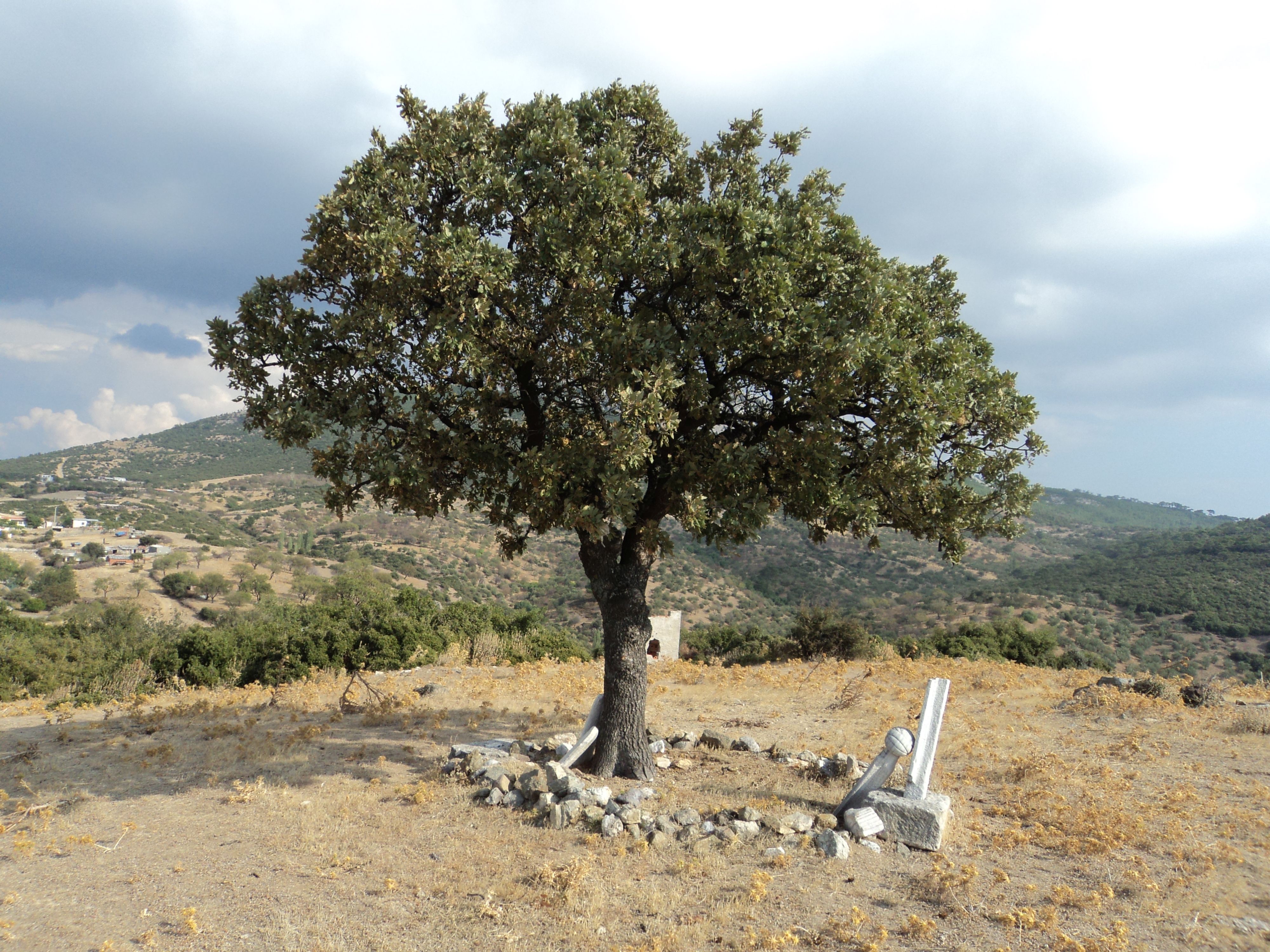
Ottoman Grave of Tavaklı

Up on the hill, there stands a tree, all forlorn and wanting. It stands alone on the top of the hill, buffeted by the wind and exposed to the elements. It never seems to grow any bigger. It has remained the same size for years. Below the tree lies a grave, an Ottoman grave. Who might he have been? What stories could he have told?
Walking up the gentle slope towards the grave, one cannot help but feel a quiet reverence. The marble tombstone is carved in the flowing script of Ottoman Turkish, slightly worn by time but still carrying the weight of centuries. Topped with a carved turban, it is immediately clear that the man buried here was not just anyone. In the Ottoman era, turbaned gravestones indicated men of status or religious standing, often scholars, local leaders, or notable figures in the village. The specific style of the turban can hint at the profession or rank of the deceased, though in this case it suggests a man of respect, possibly a learned or devout villager.
The inscription itself is written in Ottoman Turkish script, following the traditional format: an invocation in God’s name, the name and title of the deceased, prayers for mercy, and the date of his passing in the Hijri calendar. From the transcription of the text, we can read:
Ottoman script:
بسم الله الرحمن الرحيم
Hacı Mehmed Efendi
مرحمت الله عليه
وفات سنة ١٢٣٤
Modern Turkish transcription:
Bismillahirrahmanirrahim
Hacı Mehmed Efendi
Allah rahmet eylesin
Vefat: Hicri 1298
English translation:
In the name of God, the Most Gracious, the Most Merciful
Haji Mehmed Efendi
May God have mercy on him
Passed away in the year 1298 Hijri
*Hicri 1298 in modern date terms is 1881, the year he passed away.
While some letters have weathered with time, this transcription preserves the key details: the man’s name, his honourific title “Efendi,” the fact he had performed the Hajj (indicated by “Hacı”), and a prayer for his soul. The turban atop the stone, combined with these inscriptions, emphasises that Mehmed Efendi was a respected figure in the community.
The grave’s position beneath the solitary tree is striking. Hillsides in Anatolia were often chosen for burial not only for practical reasons, such as drainage, but for symbolic ones. From this elevated vantage point, the grave seems to reach for the sky, as if the man buried here has a closer connection to the heavens. The tree, steadfast against wind and sun, serves almost as a guardian, keeping watch over the grave through the years.
For travellers visiting Tavaklı, the sight is a quiet reminder of the layers of history in this region. Here, the past is tangible, not in a museum or book, but in the stone beneath your feet and the wind through the branches above. One cannot help but wonder about the life of Mehmed Efendi, the village as he knew it, and the countless stories that have vanished with time.
Even in its solitude, the grave and the tree hold a presence that is at once solemn and comforting. They invite reflection on the passage of time, on lives that once mattered deeply, and on the enduring way communities remember their dead.
Next time you pass Tavaklı, a short walk up the hill is enough to encounter this little piece of history. Stand beneath the tree, peer at the carved Ottoman letters, and let your imagination roam. For in the quiet of that hilltop, history speaks, if only you take the time to listen.






Leave a Reply