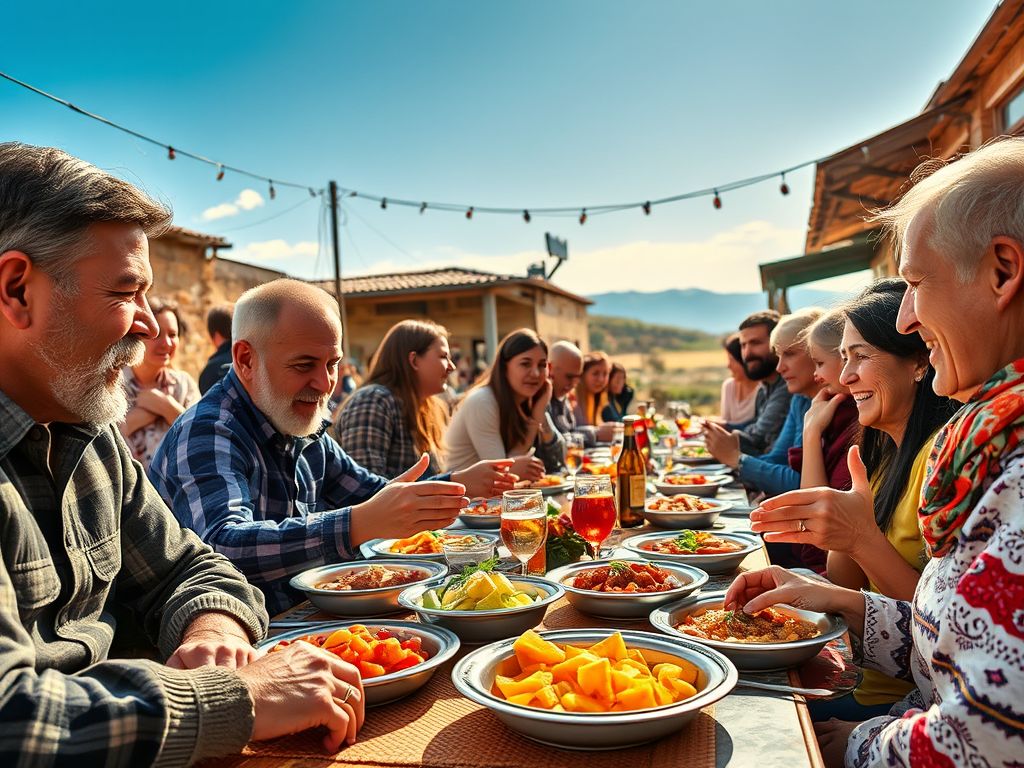
What Is a “Hayır” Day?
A hayır (sometimes written hayriye, hayir yemeği, or hayır günü) is a traditional Turkish custom where a family, a neighbourhood group, or sometimes the entire village prepares and distributes free food to everyone. It is an act of charity, gratitude, remembrance, and community bonding, deeply rooted in both Islamic tradition and rural Anatolian culture.
Why Do Villages Hold Hayır Days?
1. Religious and spiritual reasons
- To give thanks for good fortune (a good harvest, recovery from illness, safe return from travel, etc.)
- To commemorate a deceased family member (for mevlit, anniversaries, or “for the soul of…”).
- To seek blessings (bereket) or protection for the family or the village.
2. Social and cultural reasons
- It strengthens the sense of community and togetherness.
- It ensures everyone, including elderly people or those in need, can enjoy a good meal.
- It keeps local traditions alive — especially in smaller Aegean, Marmara, and inland villages.
3. Practical reasons
- It is also a way for villagers who have moved to the cities to “give back” to their home village during summer visits.
- Families sometimes hold a hayır instead of a large wedding feast or celebration.
Who Organises a Hayır?
A hayır can be organised by:
✔ Individual families
Most common. A family may sponsor a hayır to honour an event, memory, or blessing.
✔ Groups of villagers
Neighbourhood groups, farmer co-ops, or women’s groups (kadınlar grubu) may organise a bigger event together.
✔ The village administration
In some places the muhtar or local council arranges an annual hayır, especially near religious holidays, harvest time, or a saint’s day.
✔ People who have emigrated
Villagers living in Istanbul, Bursa, Germany, the Netherlands, etc. often return to sponsor a hayır in their ancestral village.
How Does a Hayır Day Work?
1. Preparations begin early
- Women gather to prepare dishes (huge pots of pilav, nohut, keşkek, meat dishes, sweets).
- Men may handle outdoor cooking (keşkek pounding, kazan cooking, setting up tables).
- Volunteers prepare the area — usually a village square, meydan, school garden, or mosque courtyard.
2. The imam recites prayers
A short prayer (dua) is made for blessings, remembrance, and the wellbeing of the community.
3. Food is served to everyone
- Absolutely everyone is invited — locals, visitors, tourists, passers-by.
- Food is free and unlimited until the pots are empty.
- People often take servings home for elderly relatives.
4. No distinction is made
A key cultural point:
A hayır is not about showing wealth.
It is considered humble charity; food is often simple but plentiful.
5. The sponsor usually stays anonymous or low-key
Traditionally, people avoid boasting. Sometimes the sponsor’s name is announced only during the prayer.
Typical Hayır Dishes
Depending on the region:
- Keşkek (very common in Aegean/Marmara villages)
- Nohutlu pilav
- Tas kebabı or village meat stews
- Zerde (saffron rice dessert)
- Helva
- Lokma (in some areas)
- Ayran or grape sherbet
- Simple salads or bread
What Visitors Should Know
- You won’t be expected to pay, ever.
- Guests are genuinely welcomed — it’s considered a blessing to feed travellers.
- It’s polite to at least taste something, even if just a little.
- Photography is usually fine, but ask first when photographing people.





Leave a Reply