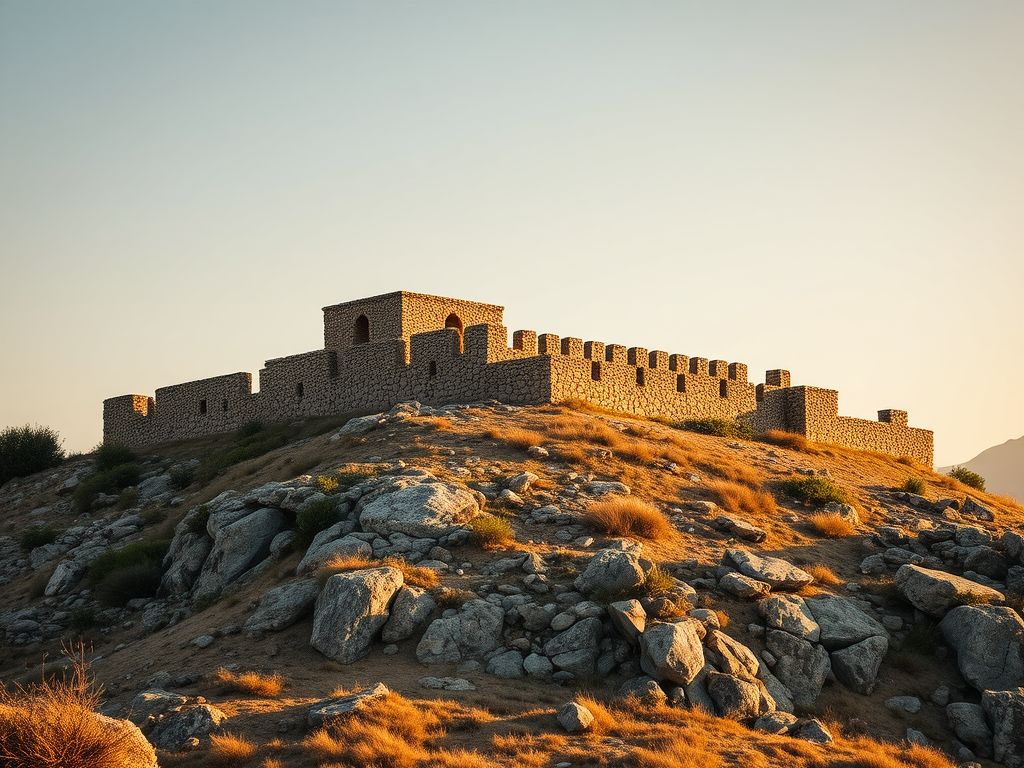
Sakar Dağı, rising above the village of Tavaklı in the Ezine district of Çanakkale, is home to a remarkable yet little-studied archaeological site. Known as Tavaklı Sakar Dağı Kalesi, this hill-top settlement covers approximately 1.6 hectares and consists of an acropolis and a lower town, all surrounded by defensive walls constructed with roughly worked polygonal stone blocks using a dry-wall technique. These fortifications, documented by Bilge Ayça Polat Becks in her 2014 study, suggest a site carefully designed for defence rather than permanent occupation. The absence of domestic buildings or abundant surface ceramics indicates that the settlement likely served as a refuge, providing safety for local inhabitants during periods of danger rather than functioning as a fully inhabited town. You can access the Polat Becks publication here: A Fortified Settlement in the Western Troad: Sakar Dağı.

The site is believed to date back to the Archaic period, before the Classical era, as suggested by the construction techniques of the walls, which omit binding stones and employ corner-gauging methods typical of early fortifications in the region. The location on a rocky hill at roughly 500 metres altitude would have provided natural defensive advantages, making it ideal as a temporary refuge. While it does not show evidence of long-term habitation, its strategic position implies that it played an important role in the security and survival strategies of local populations in the ancient Troad region.
Since the 2014 documentation, there have been several regional archaeological surveys in the Ezine and broader Çanakkale area, including the Çanakkale Prehistoric Archaeological Survey in 2021 and the Central District Archaeological Surface Survey from 2016 to 2018. These surveys have revealed numerous prehistoric and Archaic period settlements, particularly coastal, lowland, and inland sites. However, none have returned specifically to Sakar Dağı for further detailed study, and no excavations or new publications focusing exclusively on this site have been released. The site therefore remains largely under-studied, highlighting both the potential for discovery and the need for further investigation.
The existing evidence paints a picture of Sakar Dağı as a fortified refuge utilised during the Archaic period, strategically placed to offer protection in a region known for its complex settlement patterns and historical activity. The site stands as a reminder that even smaller, less-explored locations can hold significant clues about ancient ways of life, defensive strategies, and the organisation of communities in the Troad. Future surveys or excavations could shed light on how this hill-top fortress interacted with other settlements in the area, offering insights into the movements, threats, and daily lives of the people who once sought safety among its walls.
Sakar Dağı’s combination of natural elevation and man-made fortifications demonstrates the ingenuity of early communities in selecting and adapting their environment for protection. While much remains unknown, the site continues to captivate archaeologists and historians alike, representing a fragment of the larger story of human habitation and defence strategies in western Anatolia.
For the PDF research document by Dr. Bilge Ayça Polat Becks click here
If you want to learn more about Sakar Mountain and how to get there, click here.






Leave a Reply