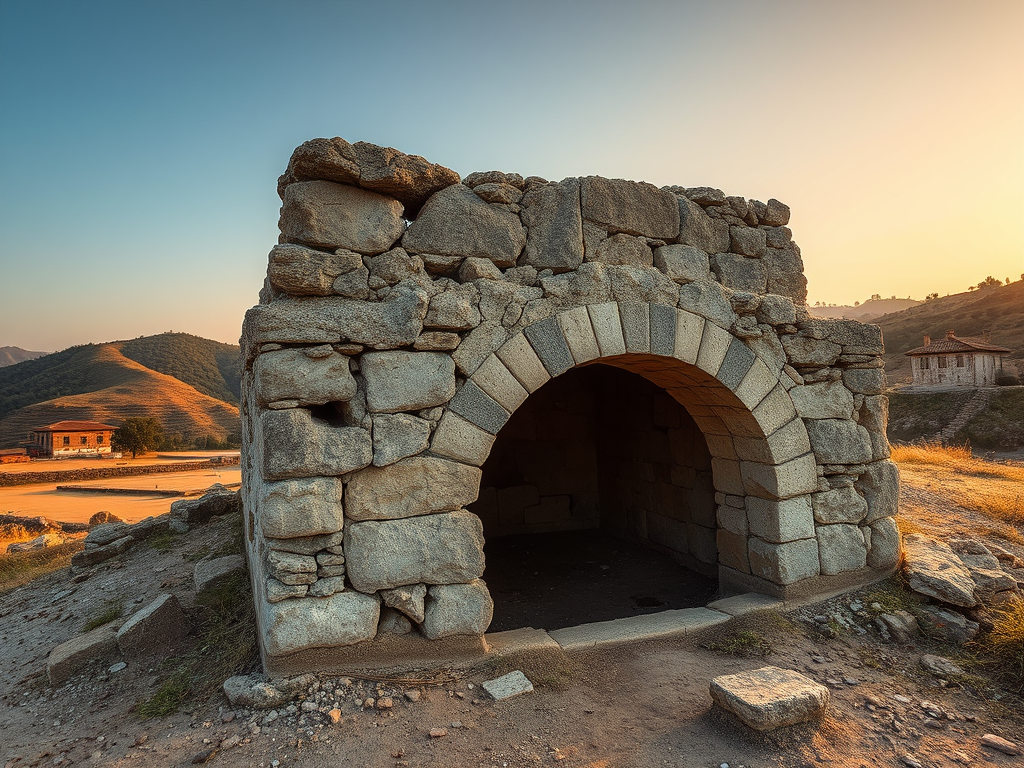
Tavaklı Köyü, a quiet village in the Ezine district of Çanakkale, may seem at first glance a typical Aegean hillside settlement, but it holds a secret that stretches back nearly two thousand years: the Tonozlu Mezar, a Roman-era tomb chamber that connects the modern village to its ancient past.
Tonozlu Mezar is situated within the boundaries of Tavaklı village, on the slopes of Sakar Dağı. While its precise coordinates are not publicly disclosed, the tomb is officially recorded in the national cultural heritage registry (KE No: 319361). This registry confirms its position within the village territory but notes that it lies in a “tescil-harici alan,” an area outside previously defined protected-site boundaries. Approximate coordinates of Tavaklı village centre are 39.671940, 26.195837 (latitude, longitude), so the tomb is somewhere in the surrounding rural area. Because exact GPS data is restricted, visitors wishing to locate Tonozlu Mezar would likely need to consult local authorities or residents for guidance. In July 2022, the regional heritage protection board officially documented the tomb, confirming it as a recognised cultural asset despite its location outside the main protected site.
The tomb is constructed using opus caementicium, a combination of mortar and rubble-stone, typical of Roman-era funerary architecture in the region. Its vaulted chamber suggests it was part of a wider necropolis associated with the ancient city of Alexandria Troas, whose ruins lie nearby. While no published excavation has been conducted on Tonozlu Mezar, its design and location indicate it was part of the burial landscape for inhabitants of the area during the Hellenistic to Roman periods. Tonozlu Mezar is one of several similar tomb structures in the rural hinterlands around Alexandria Troas, highlighting how the ancient population extended their funerary practices into the surrounding countryside. Although the identity of those buried within remains unknown, the tomb offers a tangible link to the daily lives, rituals, and practices of the region’s ancient inhabitants.
Today, Tonozlu Mezar exists as a ruin. No detailed photographs, inscriptions, or artefacts have been publicly documented, and the tomb appears largely unstudied. Its registration outside the main protected area means it does not benefit from the same level of conservation or maintenance as the central archaeological sites, leaving it vulnerable to natural decay and potential disturbance. The tomb is obscure and unmarked, with no signposts or visitor facilities. Those wishing to see it should approach with care and respect, ideally seeking guidance from local residents or heritage authorities.
Tonozlu Mezar is physically accessible from Tavaklı village, but it is not equipped for casual tourism. Its precise location is not published to the public, likely for heritage protection reasons. Visitors may need to consult local authorities or village residents to find it. Because there is no official visitor infrastructure, such as pathways, signage, or safety measures, care must be taken if attempting to view the tomb. Structural stability is uncertain, and the site should be treated with reverence to avoid damage.
Tonoz means a vault in architecture, specifically an arched ceiling or roof formed by the continuous extension of one or more arches, typically built with stone, brick, or mortar to create a self-supporting, concave structure viewed from below.
A 2022 Turkish Ministry of Culture and Tourism protection board decision (koruma kurulu kararı) briefly mentions a vaulted tomb remnant (tonozlu mezar kalıntısı) located 100 meters northwest of a hill near Tavakli village in Ezine district, noting threats from illegal excavations by treasure hunters.
The details can by found at Korumakurullari.ktb.gov.tr
For travellers and history enthusiasts, Tonozlu Mezar offers a unique glimpse into the Aegean region’s ancient past. It demonstrates that even small, seemingly ordinary villages like Tavaklı can hold important historical and archaeological significance. The tomb stands as a silent witness to centuries of human occupation, connecting modern rural life to the funerary traditions of the Roman era. In addition to its historical value, Tonozlu Mezar serves as a reminder of the need for heritage awareness. With little public recognition or conservation, the tomb’s survival depends on respect from visitors and local communities. Highlighting such sites can foster appreciation for the rich, often hidden, layers of history that lie just beyond the beaten track.
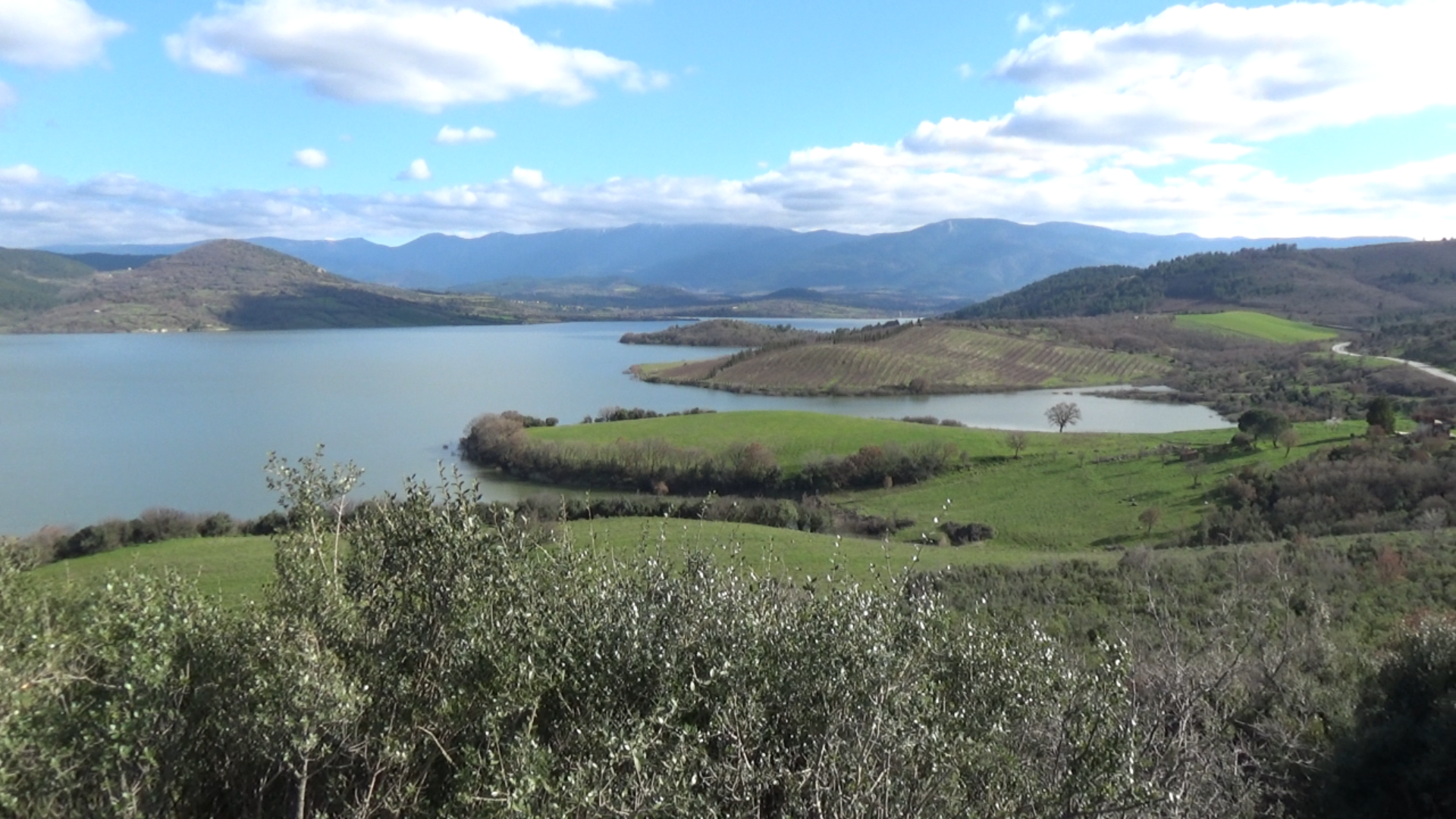
While Tonozlu Mezar is not a conventional tourist attraction, it is a fascinating piece of Tavaklı’s historical tapestry. It offers both scholars and curious travellers the chance to explore a connection to the ancient world, set amid the olive groves and hills of rural Çanakkale. For those willing to seek it out, with care and guidance, Tonozlu Mezar is a hidden gem, a quiet, enduring testament to the lives and practices of people who lived here nearly two millennia ago.






Leave a Reply