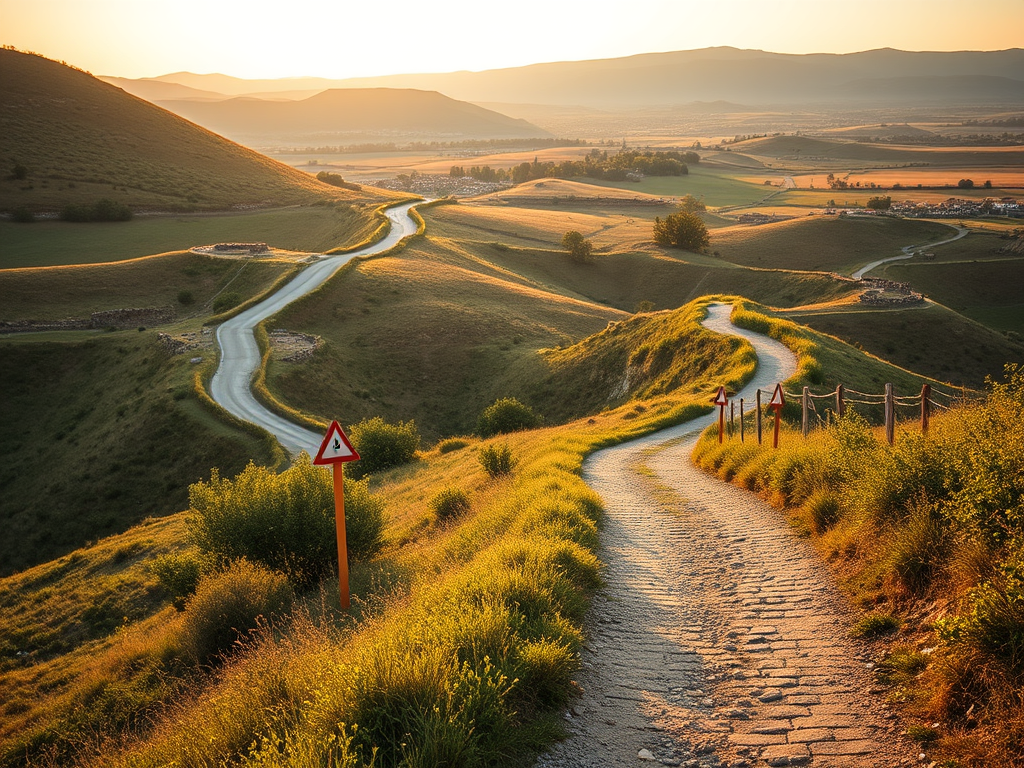
The Truva route, also known as the Troy Culture Route, begins beside the modern Troy Museum near Tevfikiye village and leads travellers on a long, winding journey of around one hundred and twenty kilometres through countryside, coastal landscapes, ancient remains and small rural villages before eventually finishing at the ancient city of Assos. It has been designed as a cultural walking and cycling trail that links together places connected with the legends and history of ancient Troy, and it is fully waymarked with the familiar red and white stripes used on official long-distance paths in Türkiye. Many walkers choose to set off directly after visiting the museum, stepping almost immediately into open farmland, low hills and the quiet rural life of the plains that once formed the setting for the stories of Troy.

The first section of the route runs from the museum towards the small settlements of Çıplak and Kalafat and finally onward to Yeniköy. This opening stage covers roughly sixteen to seventeen kilometres and can comfortably be walked in five to six hours at a moderate pace. The landscape is gentle and open, crossing the wide plain once fed by the ancient Skamandros River. On this stage walkers will also find early points of interest such as the eighteenth-century pavilion once associated with Cezayirli Hasan Pasha and, further along the plain, a large burial mound traditionally linked with the hero Achilles.

From Yeniköy the trail continues for around twenty-two kilometres through Üvecik, Çamoba and Bozköy before reaching Geyikli. This section usually takes six to seven hours on foot. It passes through rural farmland and small hamlets, but also begins to approach more clearly visible traces of antiquity. Not far off the route are the remains of Alexandria Troas, an important ancient city founded in the Hellenistic period. Although reaching the city ruins requires a short detour, the extra time rewards visitors with a large site scattered with Roman structures including the monumental bath complex known as the Atticus Baths.
Leaving Geyikli, the trail then heads to Dalyan and onwards to Akçakeçili. This is another long stage of roughly twenty-two kilometres, often taking six to seven hours to walk. The journey moves through a mixture of small valleys and agricultural zones and continues to offer sweeping views towards the Aegean coastline. Between Dalyan and Akçakeçili the landscape grows more varied, with oak and pine pockets on the slopes and occasional glimpses of older farm tracks that may follow routes used for centuries.
From Akçakeçili the path climbs gently into the hills, passing the small settlements of Alemşah and Tavaklı before continuing to Çamiçi and then reaching Kösedere. Tavaklı is a traditional rural village on the slopes of Sakar Mountain and offers a quiet and atmospheric stop between stages. This part of the journey covers about fifteen kilometres and usually takes four to five hours. The scenery becomes more rugged here, and the blend of agricultural terraces, pine groves and signs of older habitation around Tavaklı adds character to the walk. Near Tavaklı, travellers may also notice traces of historical settlement sites and small stone structures connected with the long human presence on these hillsides.
The next stage, from Kösedere to Gülpınar, is especially rich in historical remains. It follows an ancient Roman road that is still visible in places and leads across an impressive Roman-era bridge. The full distance is roughly twelve to fifteen kilometres depending on the exact route followed, and it can usually be completed in four to five hours. The sense of walking through an older world is particularly strong here, with old paving blocks and stone embankments guiding travellers along the same corridors used in antiquity.
From Gülpınar the trail continues to Kocaköy and then to Bademli. This stretch is around twelve kilometres and should be allowed four to five hours on foot. In the wider Gülpınar area sits the ancient sanctuary of Apollo Smintheus, famous for its finely carved temple remains. Although slightly off the main waymarked trail, the sanctuary is close enough to include without difficulty and is one of the most important archaeological highlights of the entire route.
The final section of the journey leads from Bademli towards small rural settlements such as Koyunevi, Bektaş, Koruoba and Korubaşı before gradually descending towards the coast and the ancient harbour city of Assos. This last part may range from thirteen to more than twenty kilometres depending on how far one walks in a single day and whether intermediate stops are chosen. Most walkers allow between five and seven hours. As the route approaches Assos the landscape becomes stonier and more dramatic, with long sea views and reminders that this coast has been travelled since Classical times. Arriving at Assos brings the walker to a spectacular ancient city perched on cliffs, with its well-preserved Temple of Athena, ancient harbour and city walls providing a memorable end to the journey.

Throughout the entire Truva route, the red and white waymarking makes it straightforward to follow. The markings appear on stones, trees, electricity poles and the edges of village roads. Villages often offer water sources, small shops or cafés, though walkers should not rely on them being open outside the peak summer months. The official digital map, which was available through the Troy Culture Route mobile application on Android and Apple devices, and used to provide GPS guidance, stage descriptions and practical information in English and Turkish no longer seems to be available. Paper maps and printed brochures are no longer available from the Troy Museum or local guesthouses.
Walking the whole trail typically requires five to seven days depending on pace, weather conditions, time spent at archaeological sites and how many stops are made in villages along the way. It is one of the most atmospheric cultural routes in Türkiye, combining mythic landscapes, historical ruins, village life and the timeless beauty of the northern Aegean coastline in a single continuous journey from Troy to Assos.
The Troy Culture Route Website can be found here: https://www.troycultureroute.com/






Leave a Reply